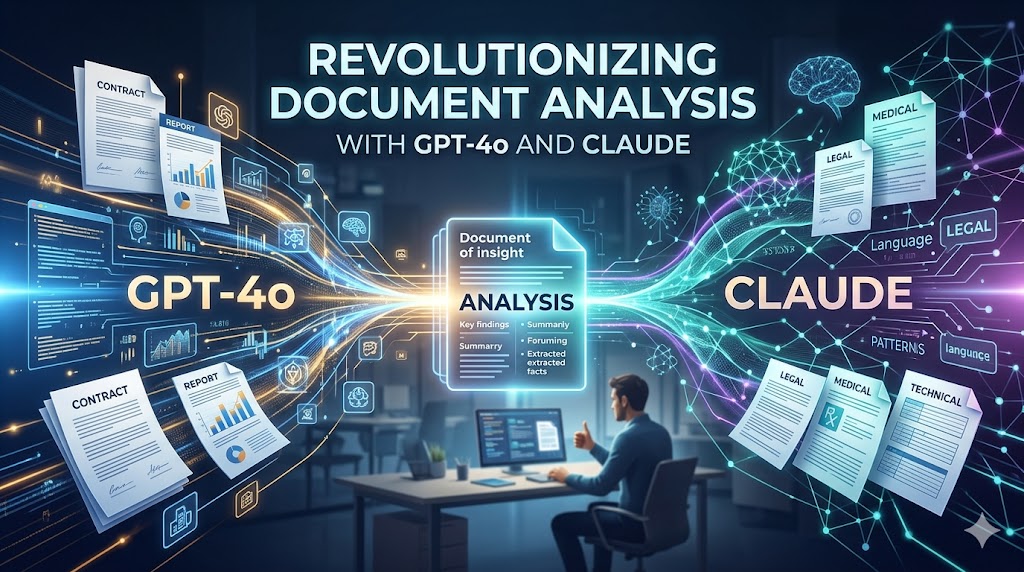
Document intelligence has entered a completely new paradigm. For years, traditional optical character recognition (OCR) was limited to extracting static text patterns. With the arrival of advanced generative AI models such as GPT-4o and Claude 3.5 Sonnet, analyzing tables, multi-column research papers, and handwritten charts has become highly accurate.
In this deep dive, we explore how combining these powerful language models within a single workspace provides users with unmatched versatility. By utilizing hybrid vector databases and advanced semantic search, users can query documents of any size and receive citations pointing directly to the exact page and paragraph containing the original source material.
### The Power of Multi-Model Workspaces
Each AI provider offers distinct advantages:
1. **GPT-4o**: Exceptionally fast, offering precise structured summaries and general reasoning capabilities.
2. **Claude 3.5 Sonnet**: Highly analytical, excelling in code snippets, detailed academic text analysis, and complex multi-page document comparisons.
By leveraging these unique features, teams can analyze financial statements, legal contracts, and medical journals with zero information loss.
Industry Insights
Published
May 14, 2026
Revolutionizing Document Analysis with GPT-4o and Claude
Admin User
DocuSense AI Editorial Team